
Modeling of Human Experiences
CJML is a visual language for modeling journeys from the perspective of the person experiencing a service. This person may be a customer, patient, user, citizen, or have another role. CJML provides the methods and tools you need for working with journeys, whether for modeling, visualization, or analysis.
Explore CJML to learn more
CJML is a visual language for modeling journeys from the perspective of the person experiencing a service. This person may be a customer, patient, user, citizen, or have another role. CJML provides the methods and tools you need for working with journeys, whether for modeling, visualization, or analysis.
Explore CJML to learn more

CJML in a nutshell
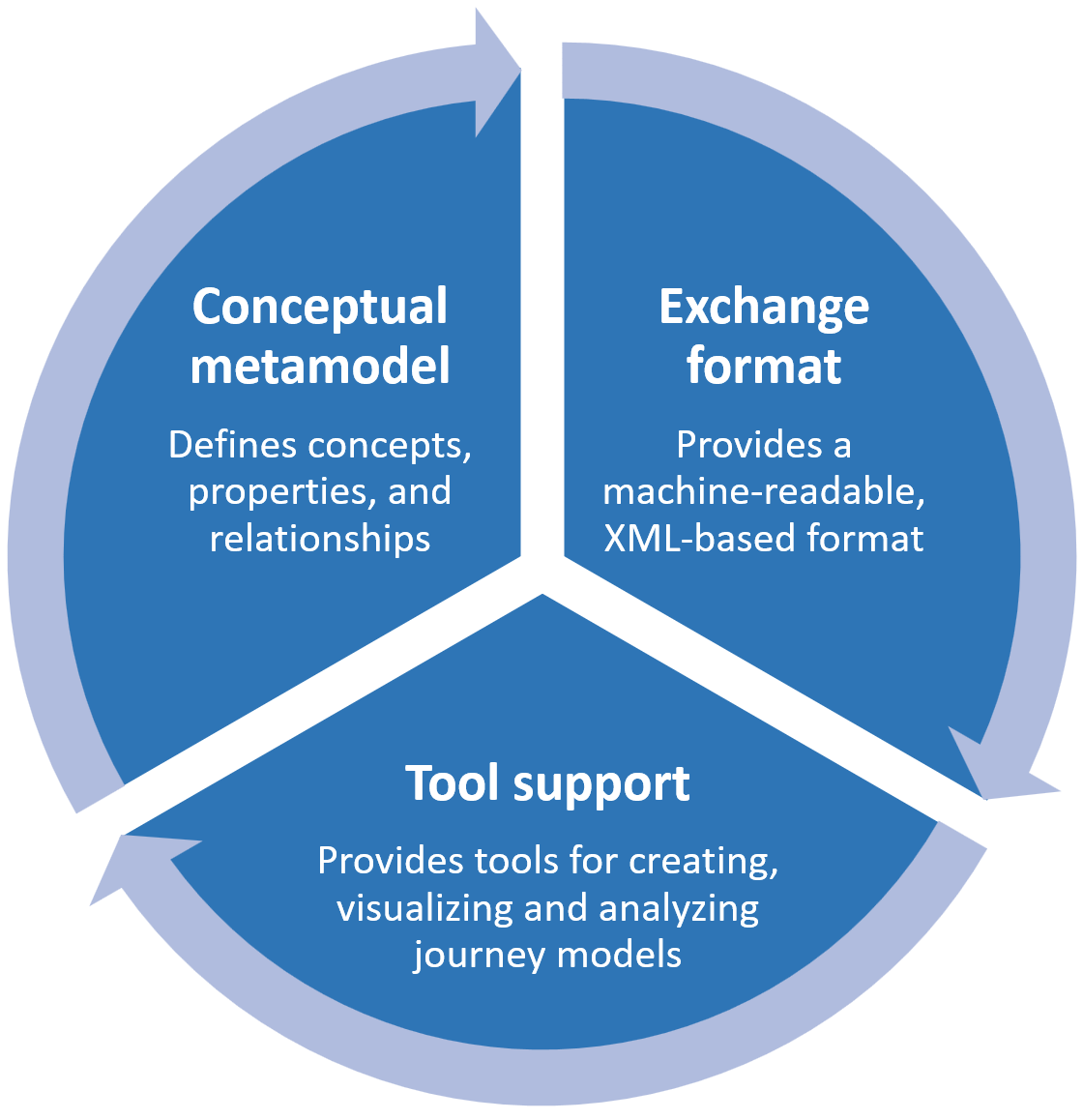


CJML results from years of research to both the practical and theoretical aspects of customer journeys. CJML has been developed in close collaboration with industry partners through multiple research and innovation projects.
Read more about the development of CJML