
CJML
CJML is a visual modeling language for working with customer journeys in a structured and intuitive way. While customer journey is the established term, CJML is not limited to customers. It can model journeys from the perspective of a person in any role. This may be a customer, patient, user, employee, citizen, or another role. This makes CJML applicable across a wide range of services and domains.
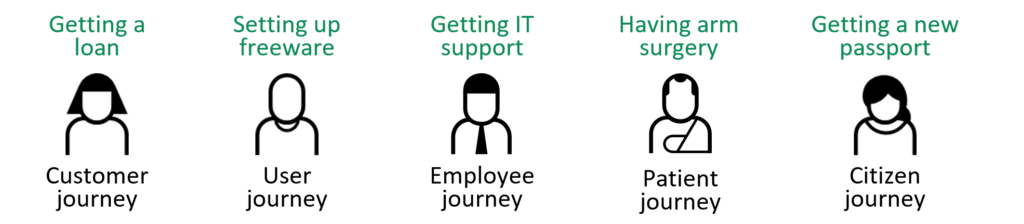
To dive deeper into CJML, explore the sections below or go to CJML Specification Documents, where you can start with the Introduction to CJML or take a broader look at journey thinking, modeling, data, analysis, and use cases in the Tutorial.
CJML specification documents
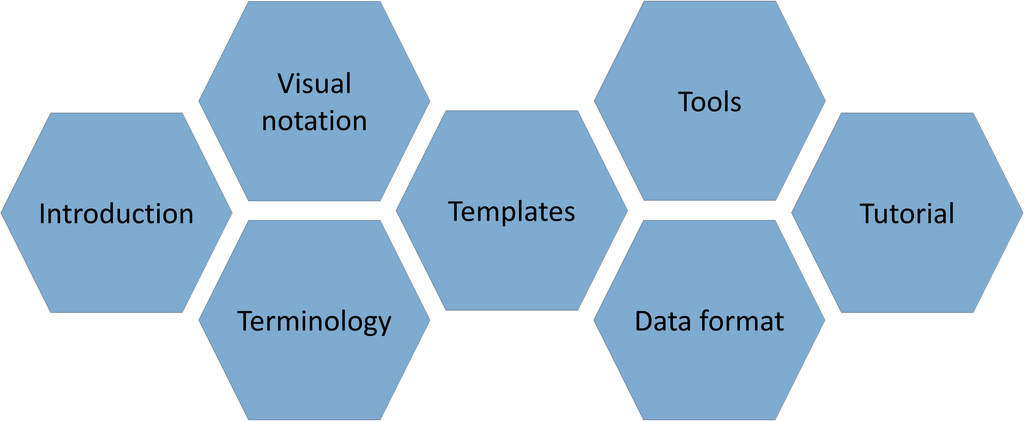
The latest version is CJML v3.0, from June 2026. It consists of seven interconnected modules, each covering a different aspect of the language. The Tools and Tutorial modules are completely new. CJML v3.0 also introduces a new set of tools for creating and working with journeys, available from the Tools menu.
- NEW [Introduction]: Overview, conceptual foundation, and a quick demo
- NEW [Visual Notation]: Diagram types, symbol gallery, visual features, and examples
- NEW [Templates]: Quick, flexible diagramming in PowerPoint
- NEW [Tools]: For creating and working with journeys
- NEW [Terminology]: Definitions, metamodel, class diagrams, and model attributes
- SOON [Data format]: Machine-readable model structure and data exchange
- NEW [Tutorial]: Journey thinking, journey data, and approaches to analysis
Previous version – CJML v2
CJML v2.1 is the previous version of the language and remains available for reference. It has now been superseded by CJML v3.0.

- CJML Introduction and overview [PowerPoint]
- CJML Visual notation [PowerPoint]
- CJML Diagram generator [PowerPoint]
- CJML Terminology [PowerPoint]
- CJML Data format [PowerPoint]